What do Hoverflies, Ivy bees and the much-loved Honey bee all have in common?
They all look like wasps from a distance and even close up when you are trying to avoid anything that looks like a wasp.
We get many calls for wasps in early spring from residents across Bedfordshire concerned they have wasps in their homes and gardens but are they wasps?
Here at Area Pest Control, we have put together an identification guide to keep you safe and hopefully ease anxiety every time something black and yellow whizzes by.
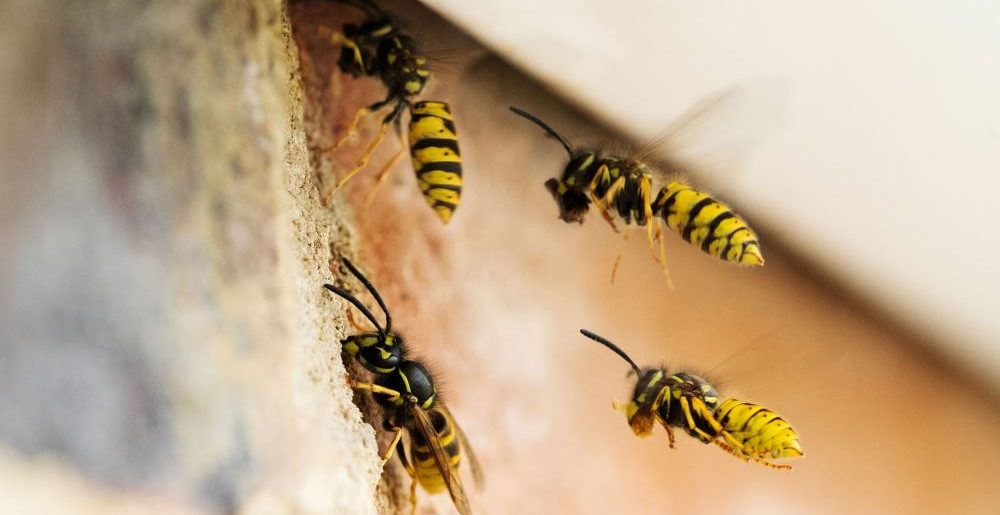
 Common wasp (Vespula vulgaris) & German wasp (Vespula germanica)
 Common wasp (Vespula vulgaris) & German wasp (Vespula germanica)
These are the two main types of wasps we have in the UK; they will build their nests high and low most commonly in lofts and the roofs of sheds and garages although they will also build their nests in the ground, under tables and just about anywhere in between. There are subtle differences between the two, the Common Wasps have an anchor-shaped marking in black on their face while German Wasps have 3 black dots, although hard to notice when you are trying to avoid them.
Hoverfly (Syrphidae) 
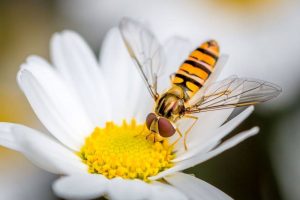
The humble Hoverfly is up next we have over 270 species of hoverfly in Britain, as their name suggests you will see them hovering around plants and flowers.
Many have black and yellow body patterns, very similar to markings on wasps and are often mistaken for wasps and bees, however, they are harmless and do not sting.
Ivy bee (Colletes hederae) 
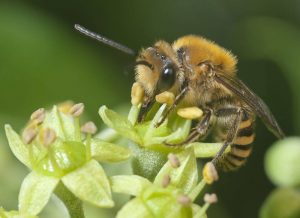
Ivy Bees are a relative newcomer to the UK with the first sighting being recorded in 2001. The Ivy bee is a solitary bee feeding mainly on the nectar of ivy flowers (hence the name) and is mainly seen from late September through to late November when the ivy is flowering. Although a solitary bee when feeding on Ivy blooms they can be seen in large numbers and will often be mistaken for a swarm of wasps.
Honey bee (Apis mellifera) 
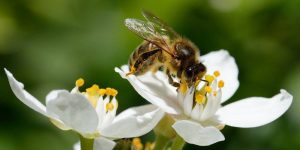
Providers of honey and pollinators to our crops the honey bee is almost universally viewed with affection in the UK, they rarely present a problem as pests.
However, feral swarms can set up home in undesirable places such as chimneys and wall cavities within homes, a beekeeper is needed when this occurs.
Honey bees are small and vary in colour from golden brown to almost black. If you believe you have a honey bee colony in your home contact a local beekeeper.
Area Pest Control recommends live removal and re-homing of honeybees wherever possible, with lethal treatment only as a last resort.
Still, think you have a wasps nest?
Find out more on wasp nest removal